



Dubai’s weather is harsh on paint. Extreme sunlight, high humidity levels, and dust are tough on every wall. Choosing the wrong paint here does not just look bad. It fades fast, peels early, and traps heat indoors.
The good news? Getting it right is simple once you understand a few climate rules. In this guide, we will explain the perfect paint choice for Dubai interiors according to each room.
You will discover the actual paint colors that suit the Dubai weather, architecture, and lifestyle. If you need to decorate one room or redecorate your entire villa, we have got you covered!
Why the Climate Of Dubai Changes Your Paint Choices
Standard paint formulas from cooler climates often fail here. Dubai homes face three specific stressors.
Heat and UV Exposure
The interior walls that come close to large windows get heated extensively during the entire day. The use of reflective, light-colored paint helps lower the heat indoors.
Humidity and Moisture
The bathroom, kitchen, and washing area are constantly exposed to moisture. Regular matte paint absorbs moisture and gets moldy over time.
Dust and Air Conditioning Cycles
Dubai homes run air conditioning almost year-round. Constant temperature swings between indoor cool and outdoor heat stress paint films.
These three factors explain why generic paint advice often falls short here. The right product matters as much as the right colour.
Best Paint Types for Interior Walls
Not all paints perform equally in Gulf conditions. Here is what actually works.
Acrylic Latex (Water-Based Emulsion)
This is the most preferred option for interior space design in Dubai. The paint dries fast, produces minimal smell, and allows air circulation on the wall surfaces. The acrylic latex is more resistant to moisture than old oil-based paints and is easy to clean.
Washable Emulsion
Washable and stain-resistant paints are good for use in family homes and busy hallway areas since they prevent marks and fingerprints.
Anti-Fungal and Moisture-Resistant Paint
For bathrooms, kitchens, or any space exposed to water. This paint fights fungi and mold formation.
Heat-Reflective Paint
Popular for use in rooms with west- or south-facing large windows. This type of paint reflects heat rather than absorbing it.
Elastomeric and Silicone-Based Coatings
Ideal for exterior wall coating and terraces, although it can also be used for feature wall interiors. Performs excellently with huge fluctuations in temperature.
| Paint Type | Best For | Key Benefit |
| Acrylic latex emulsion | General interior walls | Fast-drying, low odour, breathable |
| Washable emulsion | Living rooms, hallways, kids’ rooms | Wipeable, stain-resistant |
| Anti-fungal moisture paint | Bathrooms, kitchens, laundry | Resists mould in humid conditions |
| Heat-reflective paint | Sun-facing rooms, balconies | Reduces indoor heat absorption |
| Elastomeric/silicone coating | Exteriors, feature walls | Handles UV and temperature swings |
Choosing the Right Finish: Matte, Satin, Eggshell, or Gloss
Finish affects both appearance and durability. Each suits different rooms and different levels of wear.
- Matte: Elegant, non-reflective look. Best for premium living rooms and bedrooms with minimal traffic.
- Eggshell: A slight sheen with better wipeability than matte. Good for hallways and dining areas.
- Satin: Balances durability and appearance. Common choice for kids’ rooms and family spaces.
- Semi-gloss: Highly durable and moisture-resistant. Ideal for kitchens, bathrooms, and trim.
- High gloss: Maximum durability and shine. Best reserved for doors, skirting, and accent details.
As a general rule, higher-humidity rooms need higher sheen levels. Lower-traffic, design-focused rooms can lean matte.
Room-by-Room Colour and Paint Guide
Each room in a Dubai home faces different light, humidity, and usage patterns. Here is what works best in each space.
Living Room
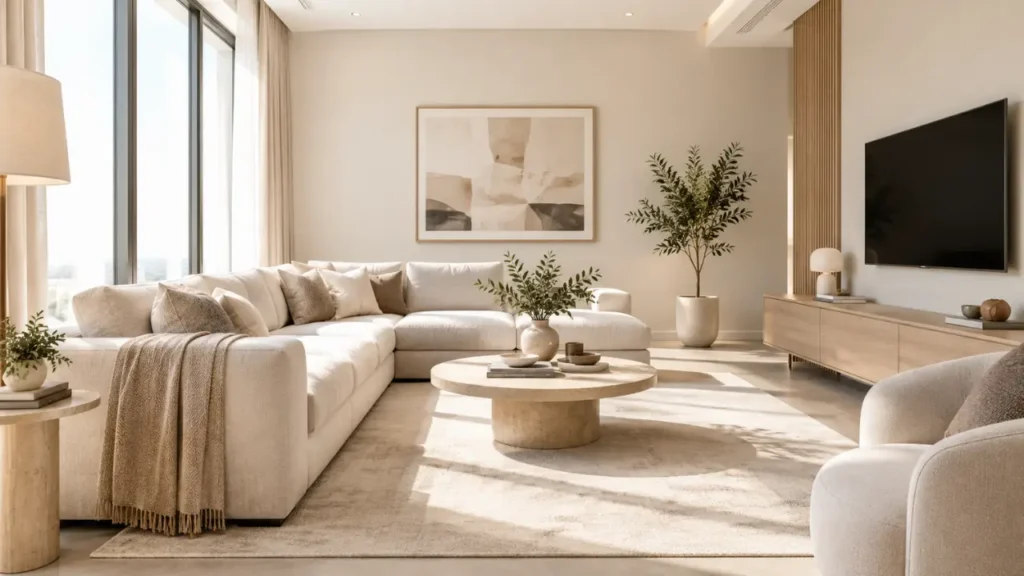
Living rooms in Dubai often get strong natural light through large windows. Light, warm neutrals keep the space bright and airy.
Recommended colours: Warm white, greige, sand beige, soft taupe.
Recommended paint: Washable matte or eggshell emulsion, for a refined look that still resists everyday marks.
Climate tip: Avoid heavy dark colours across large wall areas. They absorb more heat and can make air-conditioned rooms feel harder to cool.
Kitchen
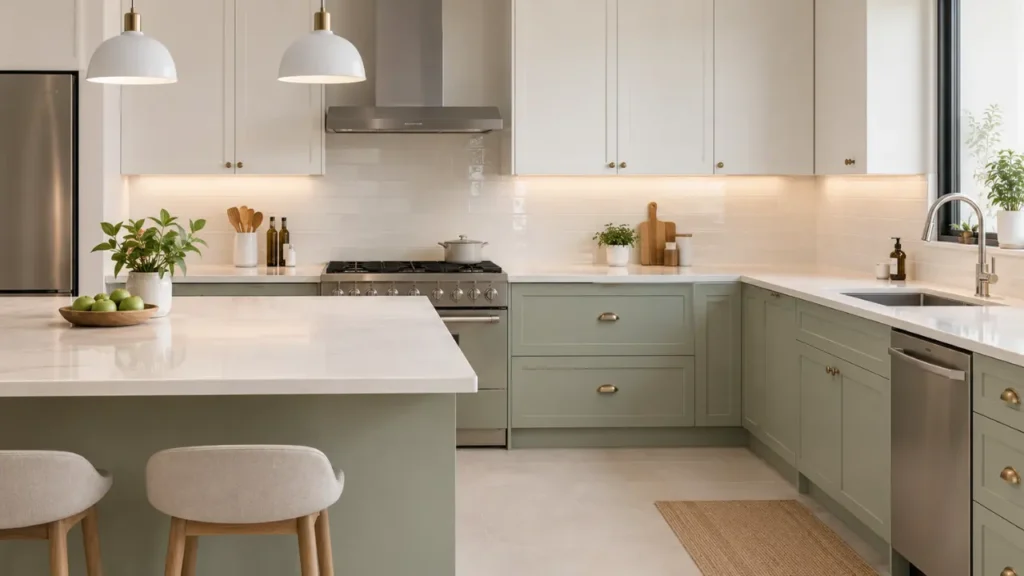
Kitchens face grease, steam, and frequent cleaning. Paint here needs to handle constant wiping without dulling.
Recommended colours: Crisp white, pale grey, soft sage green, warm cream.
Recommended paint: Semi-gloss, moisture-resistant emulsion.
Climate tip: Choose anti-fungal formulas near sinks and stovetops, where steam collects daily.
Bathroom
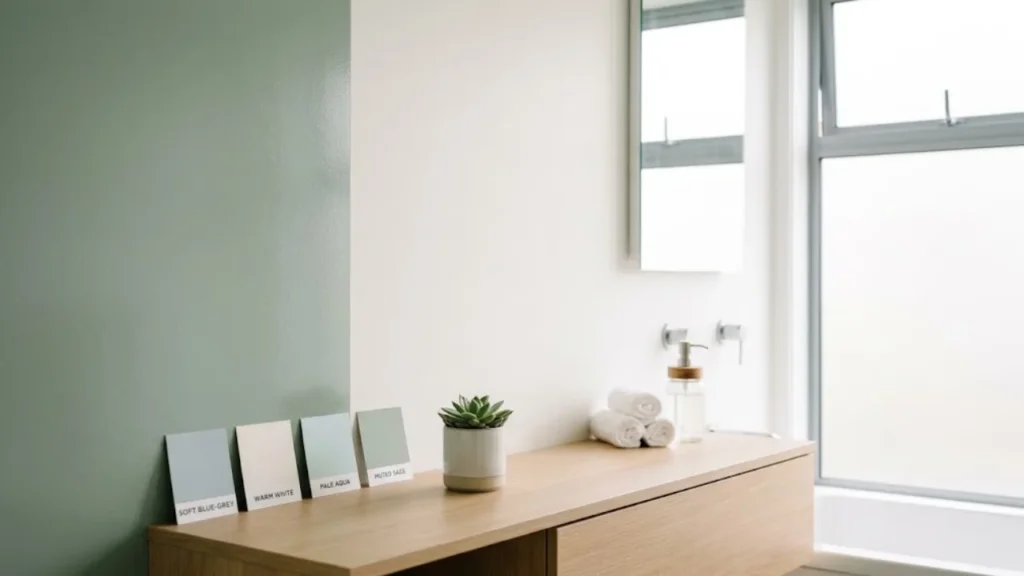
Bathrooms are the most humidity-exposed room in any Dubai home. This is not a place to cut corners on paint quality.
Recommended colours: Soft blue-grey, warm white, pale aqua, muted sage.
Recommended paint: Semi-gloss or high-gloss, anti-fungal, moisture-resistant emulsion.
Climate tip: Ensure proper ventilation during and after painting. Trapped moisture behind fresh paint invites mould quickly.
Bedrooms
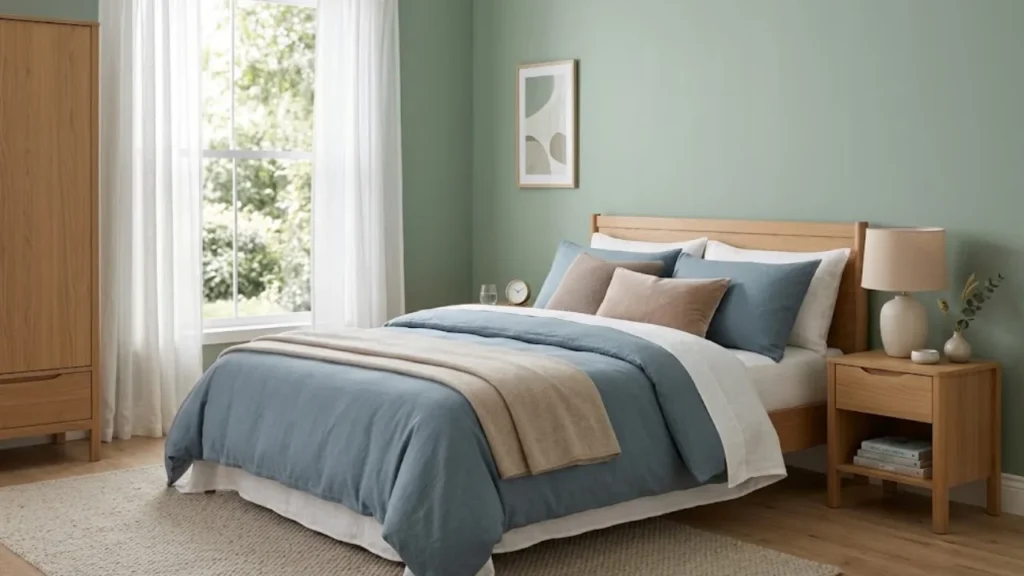
Bedrooms benefit from calming, restful tones. Since traffic is lower here, softer finishes work well.
Recommended colours: Soft sage green, dusty blue, warm taupe, blush beige.
Recommended paint: Matte or eggshell emulsion for a soft, non-reflective finish.
Climate tip: Cooler-toned pastels can psychologically enhance a room’s sense of comfort, even with air conditioning running.
Children’s Rooms
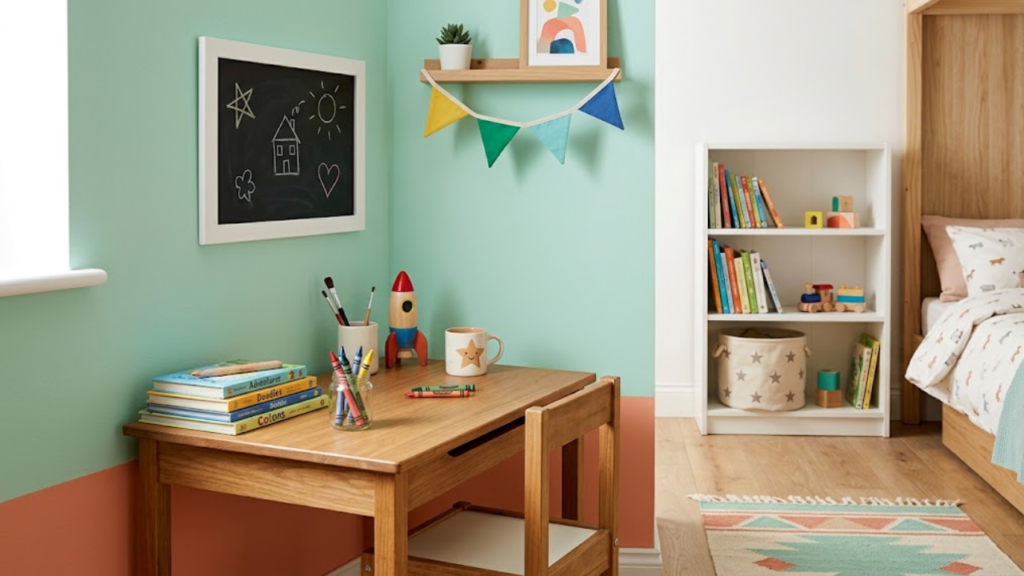
Kids’ rooms need durability alongside personality. Expect crayon marks, spills, and constant activity.
Recommended colours: Soft yellow, mint green, coral, light teal, used sparingly as accents.
Recommended paint: Washable satin emulsion, for easy wipe-downs without losing colour vibrancy.
Climate tip: Use bold colours as accent walls rather than covering entire rooms, to avoid excess heat absorption.
Home Office
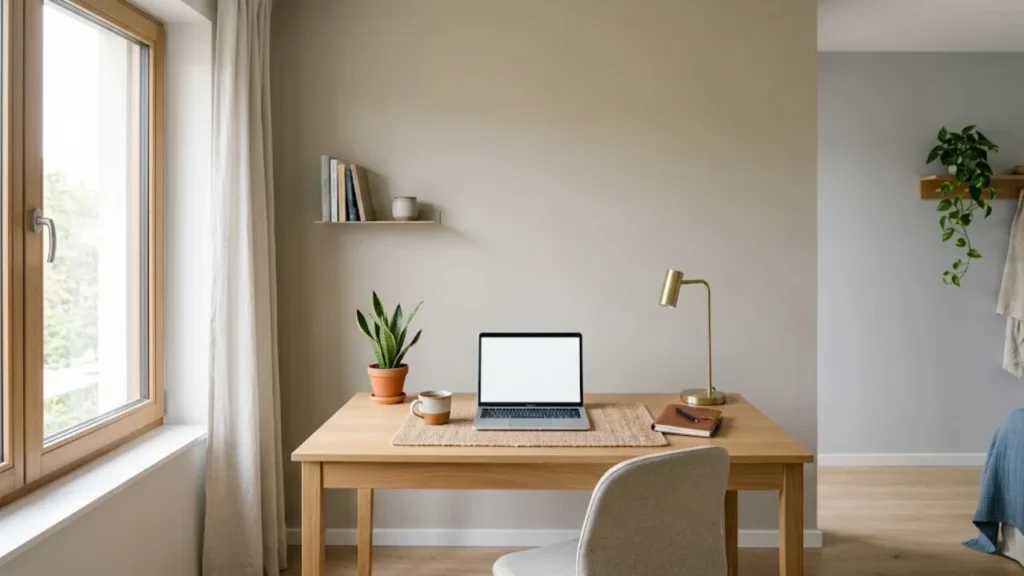
A home office should feel calm and focused, without visual fatigue. Muted, grounded tones work best.
Recommended colours: Soft grey, muted blue, warm greige, off-white.
Recommended paint: Matte or eggshell emulsion for a professional, non-distracting backdrop.
Climate tip: Position lighter tones on walls facing your main window to balance harsh outdoor glare.
Hallways and Corridors
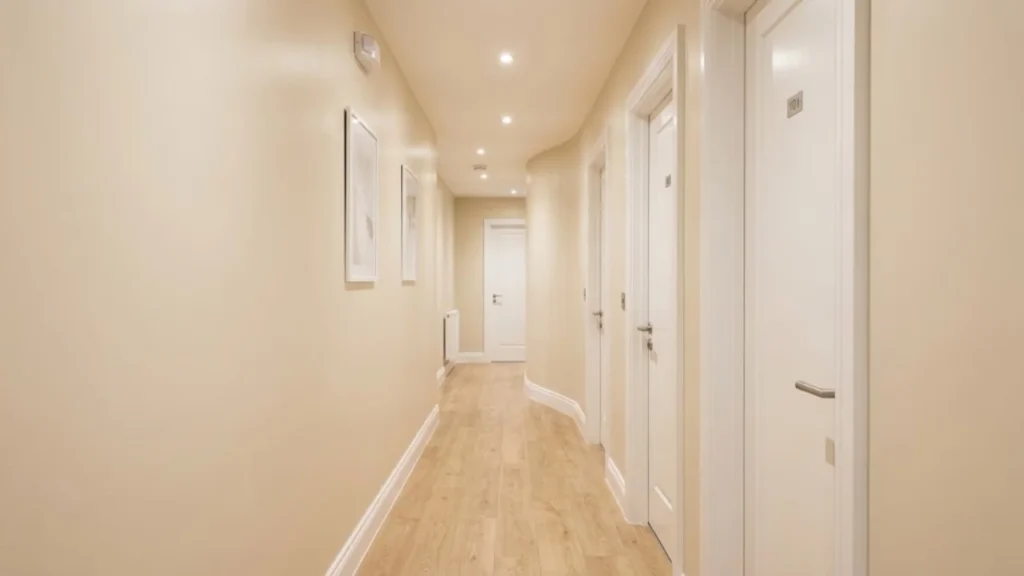
Hallways see constant foot traffic and occasional bumps. Durability matters more than in quieter rooms.
Recommended colours: Warm white, light grey, soft beige.
Recommended paint: Washable eggshell or satin emulsion.
Climate tip: Lighter hallway colours also help make narrow apartment corridors feel wider and brighter.
Balconies and Terraces (Semi-Exterior Spaces)
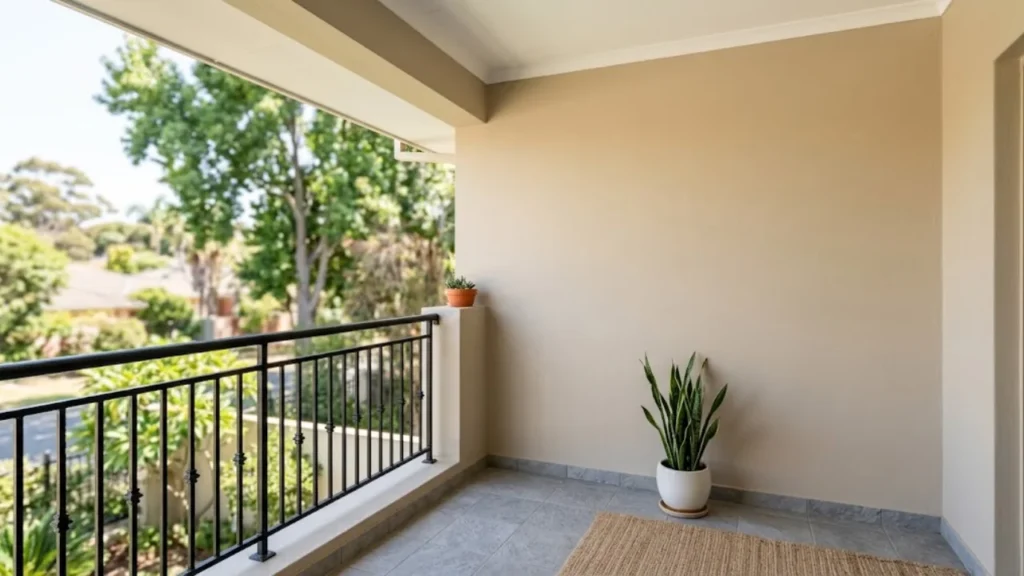
Covered balconies still face heat, dust, and occasional rain exposure. Treat these more like exterior surfaces.
Recommended colours: Sand beige, stone grey, pearl white.
Recommended paint: Weatherproof, UV-resistant exterior-grade coating.
Climate tip: Even shaded balconies benefit from UV-resistant formulas, since reflected heat still reaches these surfaces.
[Suggested internal link: link to an MDTS exterior painting or villa painting services page here.]
2026 Colour Trends for Dubai Homes
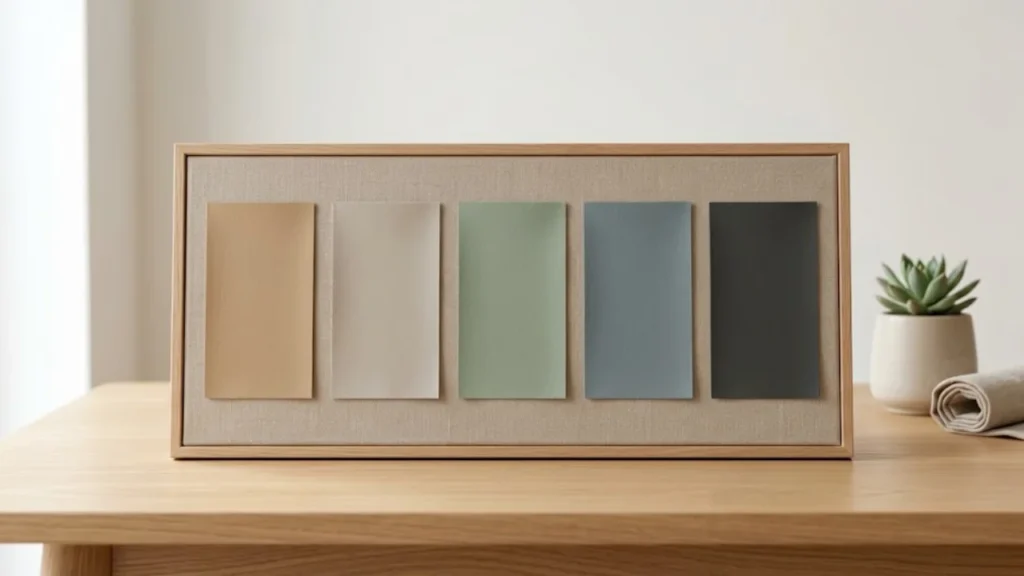
Dubai’s design trends lean toward calm, climate-smart neutrals this year. Bold accent walls remain popular, used sparingly.
- Desert Sand Beige: A warm, natural tone inspired by the surrounding landscape.
- Warm Greige: A soft blend of grey and beige, popular across modern apartments.
- Sage Green: A calming, nature-inspired accent colour for bedrooms and living rooms.
- Blue-Grey: A cool, sophisticated tone often used in bathrooms and coastal-facing homes.
- Charcoal Accents: Used sparingly on feature walls or architectural details, never as a dominant tone.
These trends balance style with practicality. Light, reflective bases dominate, with darker tones reserved for small accent areas.
Best Time to Paint Interiors
Unlike exteriors, interior painting works well year-round in Dubai. Air conditioning controls temperature and humidity indoors. Exterior painting is different. The cooler months, November through March, suit exterior work best.
In peak summer heat, exterior paint dries too fast to bond properly. This causes lap marks and early peeling on facades. If you are painting both interior and exterior walls, plan the exterior portion for cooler months. Interior work can proceed anytime.
How Much Does Painting Cost in Dubai?
Costs of painting services in Dubai vary by property size, paint quality, and preparation needed. Most professional painters price per square metre or per room.
| Service | Typical Cost Range (AED) |
| Single room (standard paint) | 900 – 1,500 |
| Interior wall painting (per sq metre) | 15 – 28 |
| One-bedroom apartment (full interior) | 2,500 – 4,000 |
| Two-bedroom apartment (full interior) | 3,000 – 6,000 |
| Three-bedroom villa (full interior) | 7,000 – 18,000 |
| Exterior painting (per sq metre) | 18 – 40 |
Prices rise with additional wall repair, premium paint brands, or dramatic colour changes requiring extra coats. Always ask for an itemised quote before booking.
Signs Your Home Needs Repainting
Not sure if it is time to repaint? Watch for these common signs.
- Visible fading, especially on sun-facing walls.
- Cracking or peeling, often near windows or bathrooms.
- Chalky residue when you touch exterior or balcony walls.
- Stains or watermarks from past humidity exposure.
- Outdated colours that no longer suit your furniture or lifestyle.
Interior walls in Dubai typically need repainting every 4 to 6 years. Exterior walls, due to heavier climate exposure, often need attention every 3 to 5 years.
Choosing a Professional Painting Service in Dubai
DIY painting can work for small touch-ups. For full rooms or villas, professional painting services deliver far better results.
What to Look For
- A valid Dubai Economy & Tourism (DET) trade licence.
- Clear, itemised quotes covering prep, paint brand, and number of coats.
- Public liability insurance for larger projects.
- A written contract with payment milestones and timelines.
- Photos of previous painting work in Dubai homes.
What Professional Painting Work Should Include
- Furniture covering and floor protection
- Wall cleaning, filling, and sanding before painting
- Primer application on new or repaired surfaces
- Two full coats minimum, for even, lasting colour
- Final clean-up and touch-up inspection
A rushed, single-coat job may look fine initially. Within months, patchiness and early fading often appear.
Conclusion
Painting a Dubai home well means respecting the climate, not just choosing a colour you like. Heat, humidity, and dust all shape which paint performs best. Light, reflective tones work best across most rooms, keeping interiors cooler and brighter. Kitchens and bathrooms need moisture-resistant, higher-sheen finishes for durability.
Bedrooms and living rooms can lean softer and more matte, prioritising comfort and calm. Save bold, dark tones for accent walls rather than full rooms. With the right paint type, finish, and colour for each space, your home will look better and last longer. A professional painting team ensures that result from day one.