
Categories Smart Home Solutions & Technology

What Is Home Automation and How Does It Work? (2026 UAE Guide)

What Is Home Automation and How Does It Work

You go to work. The air conditioning remains on in an empty villa. Your maid arrives, but you are busy with some work downtown. Your children return from school and find the doors locked and nobody at home. The summer electricity bills start crossing AED 2,000. You are uncertain which appliance has caused the bills.

If any part of this story seems familiar to you, then you are not alone. Every other homeowner in the UAE faces this sort of daily clash between comfort, security, and cost. Home Automation resolves exactly this problem. Your lighting, AC, locks, shutters, and cameras become controlled by the same convenient system.

This guide gives insight into what home automation is. It also describes how it functions, its price, and the systems that can be used in Dubai, UAE. By the end, you will understand home automation clearly enough to choose the right system for your own home.

What Is Home Automation?

Home automation means using connected technology to control household systems automatically. This includes lighting, temperature, security, entertainment, and appliances. Instead of manually operating each device, a central system manages them together. Devices communicate with each other and respond to schedules, sensors, or your voice. In simple terms, home automation comes down to one idea. Your home starts thinking and acting on your behalf.

Home Automation Introduction

Smart Home automation is not a brand-new thing. Early versions used simple timers to switch lights on and off. Today, systems go far beyond that. Modern platforms use sensors, artificial intelligence, and internet connectivity to make real decisions. 

For example, a motion sensor can trigger lights on only when someone enters a room. A climate sensor can lower AC settings automatically once residents leave home. This shift from basic switches to intelligent systems defines modern home automation. It is proactive, not just reactive.

How Do Electronic Homes Work?

How Do Electronic Homes Work The Core Components

Understanding how electronic homes work requires breaking the system into four core parts. Each part plays a distinct role.

1. Sensors

Sensors detect changes in the environment. They measure motion, temperature, light levels, humidity, or even door and window status.

Temperature sensors are especially valuable in Dubai. They help systems respond instantly to extreme heat.

2. Smart Devices

Smart devices are the physical products you interact with directly. Examples include smart bulbs, locks, thermostats, and smart plugs.

These devices connect to a network and can be controlled remotely. Many also work together automatically without manual input.

3. The Home Automation Controller

The home automation controller is the brain of the system. It receives data from sensors and sends commands to devices. Some controllers are simple hubs installed in a utility room. Others are software-based platforms accessed through an app. 

Popular controller types include Control4, Crestron, Savant, and Loxone. KNX-based systems also use a dedicated central controller for larger properties.

4. Connectivity Networks

Devices need a way to communicate with each other and the controller. Several protocols exist for this purpose.

ProtocolCommon Use CaseNotes
Wi-FiCameras, smart plugs, simple devicesEasy setup, higher power use
ZigbeeLighting, sensorsLow power, mesh network
Z-WaveLocks, sensorsReliable, moderate range
KNXFull villa automationWired, industry standard in UAE
MatterCross-brand compatibilityNewer, growing adoption in 2026

KNX remains especially popular in UAE villas. It uses a dedicated two-wire cable connecting lighting, blinds, and HVAC sensors to one system.

Types of Home Automation Systems

A home automation system is not one single product. It is a category with several different structures.

Standalone Smart Devices

These are individual products, like a smart bulb or smart plug. They work independently through their own app. This approach suits renters or small budgets. However, devices often do not communicate well across different brands.

Hub-Based Systems

A central hub connects multiple smart devices from different brands. Popular examples include Samsung SmartThings and Amazon Echo-based setups. This offers more coordination than standalone devices. It still has some compatibility limitations depending on brand support.

Full Home Automation Systems

Full home automation systems integrate every function into one professionally designed network. Lighting, climate, security, entertainment, and irrigation all work together. These systems typically use wired protocols like KNX for reliability. They are common in villas across Dubai, Abu Dhabi, and Sharjah.

House Automation Systems for New Builds vs. Retrofits

New-build house automation systems can use wired infrastructure planned during construction. This offers the most reliable long-term performance. Retrofitted systems for existing homes typically rely more on wireless protocols. Installation is faster but may involve slightly more maintenance over time.

Smart Home Automation vs. Traditional Home Automation

People often use “smart home automation” and “home automation” interchangeably. There is a subtle difference worth understanding. Traditional home automation focuses on programmed control. Devices follow fixed schedules or manual triggers.

Smart home automation adds artificial intelligence and learning behavior. Systems adapt based on patterns, not just fixed rules. For example, a smart thermostat can learn your preferred temperature by time of day. It then adjusts automatically without any manual programming.

In 2026, most new UAE installations fall into the smart home automation category. AI-driven features are quickly becoming the standard expectation.

Why Home Automation Matters More in the UAE

hot Dubai skyline next to a cool, automated villa interior

Home automation offers real value everywhere. In the UAE, several local factors make it especially practical.

Extreme Heat and Climate Control

Summer temperatures regularly exceed 40°C in Dubai and across the UAE. Automated climate control becomes essential, not optional. Smart thermostats can pre-cool rooms before residents arrive home. This balances comfort with meaningful energy savings.

High Electricity and Cooling Costs

Cooling accounts for a large share of household electricity use in the UAE. Automated scheduling helps reduce unnecessary AC running time. Energy monitoring features also show exactly which devices consume the most power. This visibility helps residents cut costs intentionally.

Security and Peace of Mind

Many UAE households include domestic staff, frequent travel, or extended family visits. Remote monitoring adds a valuable layer of security. Smart locks can log entry and exit times automatically. Cameras can send instant alerts when unusual activity is detected.

Rising Property Value

Developers including Emaar, DAMAC, and Aldar increasingly include smart systems as standard. Industry sources suggest a well-specified automation system can add 5 to 15 percent to resale value.

This makes home automation both a lifestyle upgrade and a financial consideration. It is increasingly expected, not just appreciated.

Key Home Automation Brands to Know

Choosing the right home automation brands depends on your budget, property size, and desired features. Here are widely recognized options in the UAE market.

  • KNX-based systems: The international standard for wired building automation, favored for larger villas.
  • Control4: A premium full-home platform known for entertainment and whole-home integration.
  • Crestron: Popular in high-end residential and commercial automation projects.
  • Savant: Known for polished interfaces and luxury residential installations.
  • Loxone: Offers flexible automation with strong energy management features.
  • Schneider Electric (Wiser): Focuses on energy management alongside lighting and climate control.
  • Ajax Systems: A strong choice specifically for smart security and alarm systems.
  • Google and Amazon ecosystems: Suitable for simpler, voice-driven smart home setups.

Best Smart Home Automation Systems by Property Type

Property TypeRecommended Approach
Small apartmentHub-based or standalone smart devices
Mid-size villaKNX or Loxone with professional installation
Luxury villaControl4, Crestron, or Savant with full integration
Rental propertyWireless retrofit devices for flexibility

Working with a licensed installer in Dubai ensures proper configuration and long-term support. This matters especially for full home automation systems with multiple integrated functions.

How to Set Up Home Automation

Setting up home automation does not need to feel overwhelming. Breaking it into stages makes the process manageable.

  1. Define your priorities: Decide whether security, climate control, or convenience matters most to you.
  2. Choose wired or wireless infrastructure: New builds benefit from wired systems, while existing homes often use wireless retrofits.
  3. Select a controller and ecosystem: Choose a home automation controller compatible with your chosen devices and protocols.
  4. Start with core systems: Prioritize lighting, climate control, and security before adding entertainment features.
  5. Work with a licensed installer: Professional setup reduces configuration errors and improves long-term reliability.
  6. Test automation routines gradually: Introduce schedules and triggers slowly to confirm everything behaves as expected.
  7. Review energy and usage data regularly: Use built-in monitoring tools to refine settings over time.

This structured approach applies whether you are installing a small starter system or a full villa-wide network.

Common Home Automation Myths, Clarified

“It’s Only for Luxury Homes”

While premium systems exist, entry-level smart devices are now widely affordable. Many apartments in the UAE now include basic smart features as standard.

“It’s Too Complicated to Use”

Modern apps are designed for everyday users, not technical experts. Most systems use simple dashboards and voice commands.

“It Will Increase My Electricity Bill”

In most cases, home automation reduces consumption rather than increasing it. Automated scheduling prevents unnecessary AC and lighting usage.

“All Systems Work the Same Way”

System capabilities vary significantly between wired, wireless, hub-based, and full integration setups. Choosing correctly depends on your specific property and goals.

The Future of Home Automation in the UAE

The Future of Home Automation in the UAE

The UAE’s smart home market continues expanding rapidly through 2026 and beyond. Government initiatives like Smart Dubai actively encourage this growth. Artificial intelligence is becoming central to new installations. Systems increasingly analyze patterns to anticipate needs rather than simply respond to commands.

Cross-brand compatibility is also improving through newer standards like Matter. This makes combining devices from different manufacturers easier than before. For UAE homeowners, this means more flexibility and fewer compatibility headaches going forward. The technology is maturing quickly toward true convergence.

Conclusion

So, what is home automation, in practical terms? It is a system that gives your home the ability to manage itself intelligently. Sensors detect conditions. A controller processes that information. Smart devices respond automatically, based on your preferences. In the UAE, this technology solves real daily problems. It manages extreme heat, reduces energy waste, and strengthens home security.

Whether you choose a simple hub-based setup or a full villa-wide KNX system, the goal remains the same. Your home should work for you, not the other way around. Understanding these fundamentals puts you in a strong position. You can now choose a system that truly fits your home and lifestyle.

Frequently Asked Questions

Categories Renovations

Painting Tips for Dubai Homes: Best Colours & Paint Types for Each Room

Best Paint for Dubai Homes Room-by-Room Color Guide

Dubai’s weather is harsh on paint. Extreme sunlight, high humidity levels, and dust are tough on every wall. Choosing the wrong paint here does not just look bad. It fades fast, peels early, and traps heat indoors.

The good news? Getting it right is simple once you understand a few climate rules.  In this guide, we will explain the perfect paint choice for Dubai interiors according to each room.

You will discover the actual paint colors that suit the Dubai weather, architecture, and lifestyle. If you need to decorate one room or redecorate your entire villa, we have got you covered!

Why the Climate Of Dubai Changes Your Paint Choices

Standard paint formulas from cooler climates often fail here. Dubai homes face three specific stressors.

Heat and UV Exposure

The interior walls that come close to large windows get heated extensively during the entire day. The use of reflective, light-colored paint helps lower the heat indoors.

Humidity and Moisture

The bathroom, kitchen, and washing area are constantly exposed to moisture. Regular matte paint absorbs moisture and gets moldy over time.

Dust and Air Conditioning Cycles

Dubai homes run air conditioning almost year-round. Constant temperature swings between indoor cool and outdoor heat stress paint films.

These three factors explain why generic paint advice often falls short here. The right product matters as much as the right colour.

Best Paint Types for Interior Walls

Not all paints perform equally in Gulf conditions. Here is what actually works.

Acrylic Latex (Water-Based Emulsion)

This is the most preferred option for interior space design in Dubai. The paint dries fast, produces minimal smell, and allows air circulation on the wall surfaces. The acrylic latex is more resistant to moisture than old oil-based paints and is easy to clean.

Washable Emulsion

Washable and stain-resistant paints are good for use in family homes and busy hallway areas since they prevent marks and fingerprints.

Anti-Fungal and Moisture-Resistant Paint

For bathrooms, kitchens, or any space exposed to water. This paint fights fungi and mold formation.

Heat-Reflective Paint

Popular for use in rooms with west- or south-facing large windows. This type of paint reflects heat rather than absorbing it.

Elastomeric and Silicone-Based Coatings

Ideal for exterior wall coating and terraces, although it can also be used for feature wall interiors. Performs excellently with huge fluctuations in temperature.

Paint TypeBest ForKey Benefit
Acrylic latex emulsionGeneral interior wallsFast-drying, low odour, breathable
Washable emulsionLiving rooms, hallways, kids’ roomsWipeable, stain-resistant
Anti-fungal moisture paintBathrooms, kitchens, laundryResists mould in humid conditions
Heat-reflective paintSun-facing rooms, balconiesReduces indoor heat absorption
Elastomeric/silicone coatingExteriors, feature wallsHandles UV and temperature swings

Choosing the Right Finish: Matte, Satin, Eggshell, or Gloss

Finish affects both appearance and durability. Each suits different rooms and different levels of wear.

  • Matte: Elegant, non-reflective look. Best for premium living rooms and bedrooms with minimal traffic.
  • Eggshell: A slight sheen with better wipeability than matte. Good for hallways and dining areas.
  • Satin: Balances durability and appearance. Common choice for kids’ rooms and family spaces.
  • Semi-gloss: Highly durable and moisture-resistant. Ideal for kitchens, bathrooms, and trim.
  • High gloss: Maximum durability and shine. Best reserved for doors, skirting, and accent details.

As a general rule, higher-humidity rooms need higher sheen levels. Lower-traffic, design-focused rooms can lean matte.

Room-by-Room Colour and Paint Guide

Each room in a Dubai home faces different light, humidity, and usage patterns. Here is what works best in each space.

Living Room

Living room painting colort

Living rooms in Dubai often get strong natural light through large windows. Light, warm neutrals keep the space bright and airy.

Recommended colours: Warm white, greige, sand beige, soft taupe.

Recommended paint: Washable matte or eggshell emulsion, for a refined look that still resists everyday marks.

Climate tip: Avoid heavy dark colours across large wall areas. They absorb more heat and can make air-conditioned rooms feel harder to cool.

Kitchen

Kitchen painting color Semi-gloss, moisture-resistant emulsion

Kitchens face grease, steam, and frequent cleaning. Paint here needs to handle constant wiping without dulling.

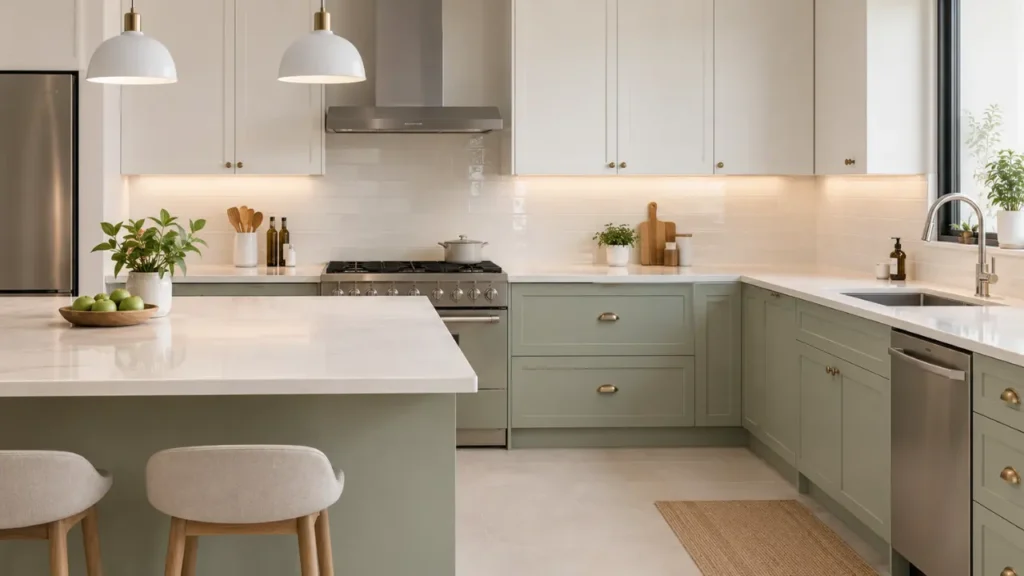
Recommended colours: Crisp white, pale grey, soft sage green, warm cream.

Recommended paint: Semi-gloss, moisture-resistant emulsion.

Climate tip: Choose anti-fungal formulas near sinks and stovetops, where steam collects daily.

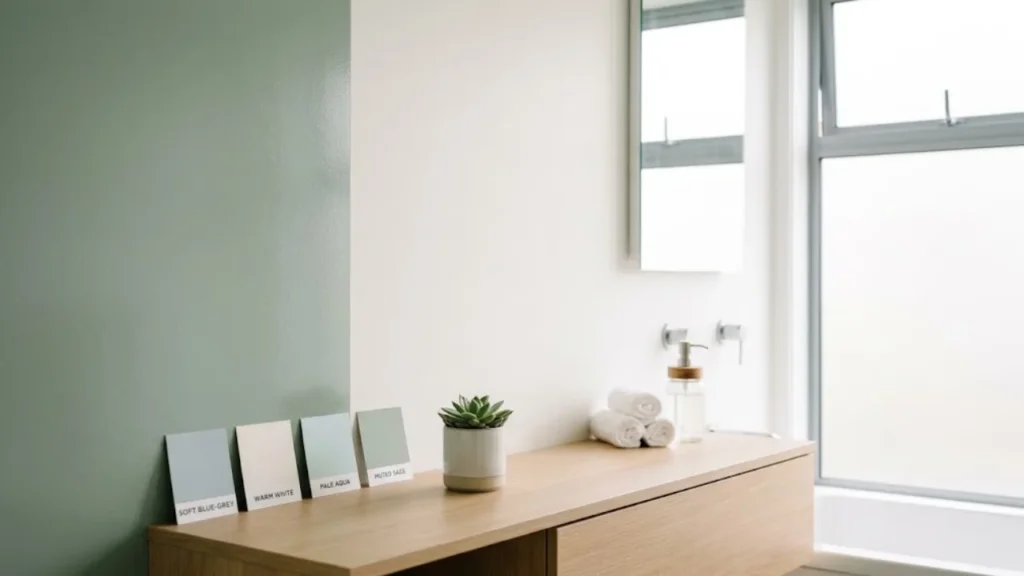
Bathroom

Bathroom painting color is Semi-gloss or high-gloss, anti-fungal, moisture-resistant emulsion

Bathrooms are the most humidity-exposed room in any Dubai home. This is not a place to cut corners on paint quality.

Recommended colours: Soft blue-grey, warm white, pale aqua, muted sage.

Recommended paint: Semi-gloss or high-gloss, anti-fungal, moisture-resistant emulsion.

Climate tip: Ensure proper ventilation during and after painting. Trapped moisture behind fresh paint invites mould quickly.

Bedrooms

Bedroom painting color is Matte or eggshell emulsion for a soft, non-reflective finish

Bedrooms benefit from calming, restful tones. Since traffic is lower here, softer finishes work well.

Recommended colours: Soft sage green, dusty blue, warm taupe, blush beige.

Recommended paint: Matte or eggshell emulsion for a soft, non-reflective finish.

Climate tip: Cooler-toned pastels can psychologically enhance a room’s sense of comfort, even with air conditioning running.

Children’s Rooms

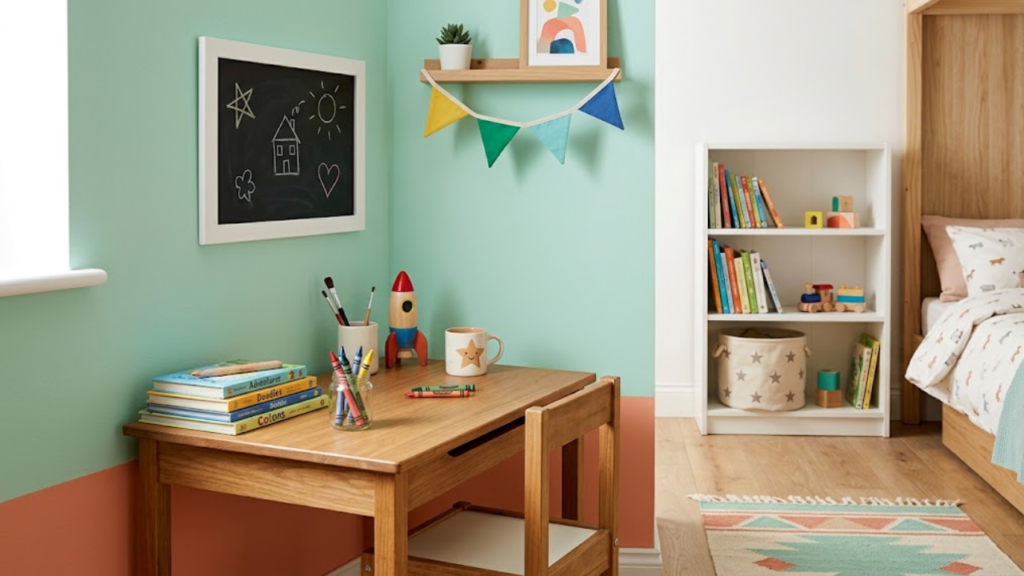
Children Rooms painting color is Soft yellow, mint green, coral, light teal, used sparingly as accents

Kids’ rooms need durability alongside personality. Expect crayon marks, spills, and constant activity.

Recommended colours: Soft yellow, mint green, coral, light teal, used sparingly as accents.

Recommended paint: Washable satin emulsion, for easy wipe-downs without losing colour vibrancy.

Climate tip: Use bold colours as accent walls rather than covering entire rooms, to avoid excess heat absorption.

Home Office

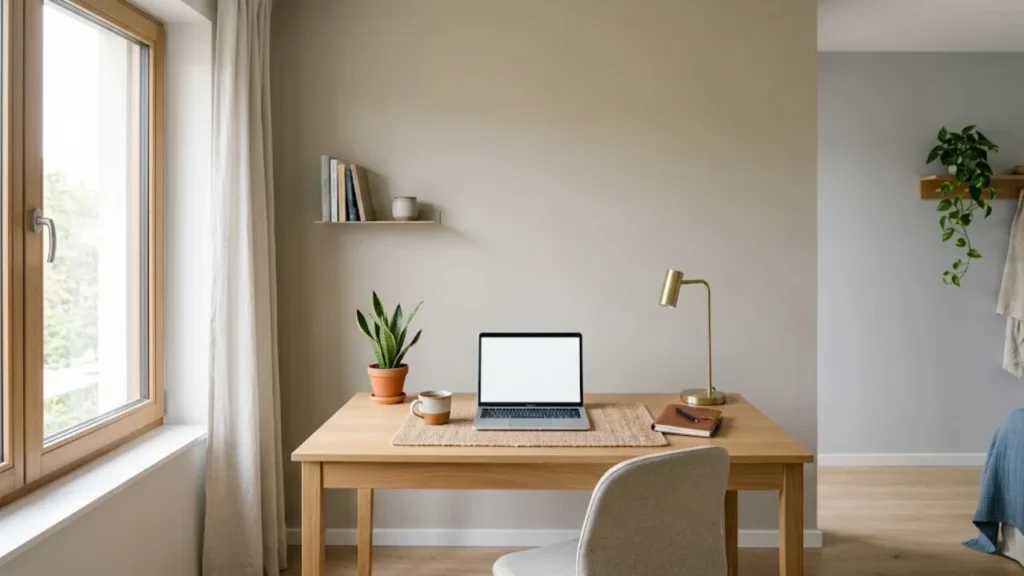
Home Office Rooms painting color

A home office should feel calm and focused, without visual fatigue. Muted, grounded tones work best.

Recommended colours: Soft grey, muted blue, warm greige, off-white.

Recommended paint: Matte or eggshell emulsion for a professional, non-distracting backdrop.

Climate tip: Position lighter tones on walls facing your main window to balance harsh outdoor glare.

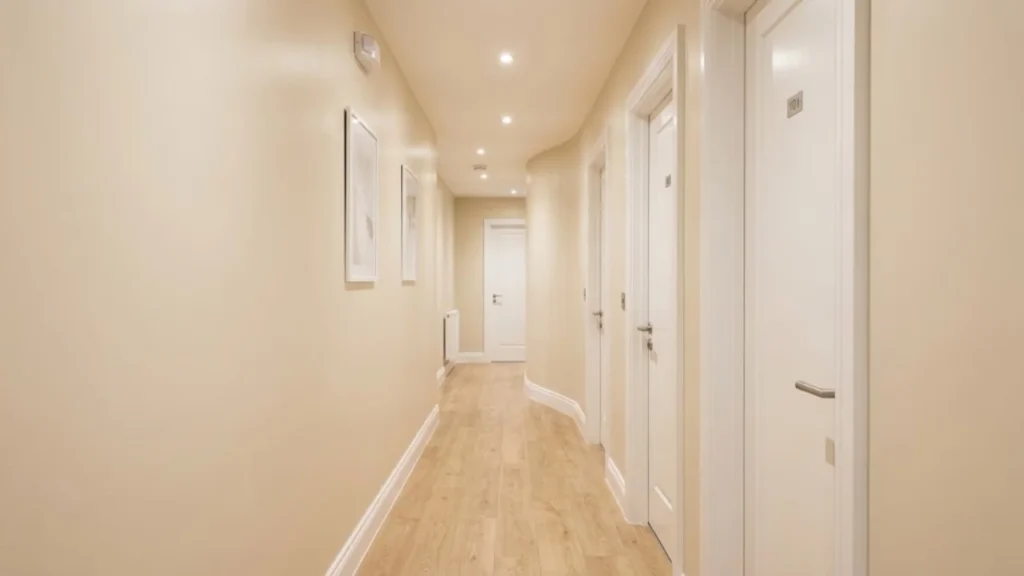
Hallways and Corridors

Hallways and Corridors painting color

Hallways see constant foot traffic and occasional bumps. Durability matters more than in quieter rooms.

Recommended colours: Warm white, light grey, soft beige.

Recommended paint: Washable eggshell or satin emulsion.

Climate tip: Lighter hallway colours also help make narrow apartment corridors feel wider and brighter.

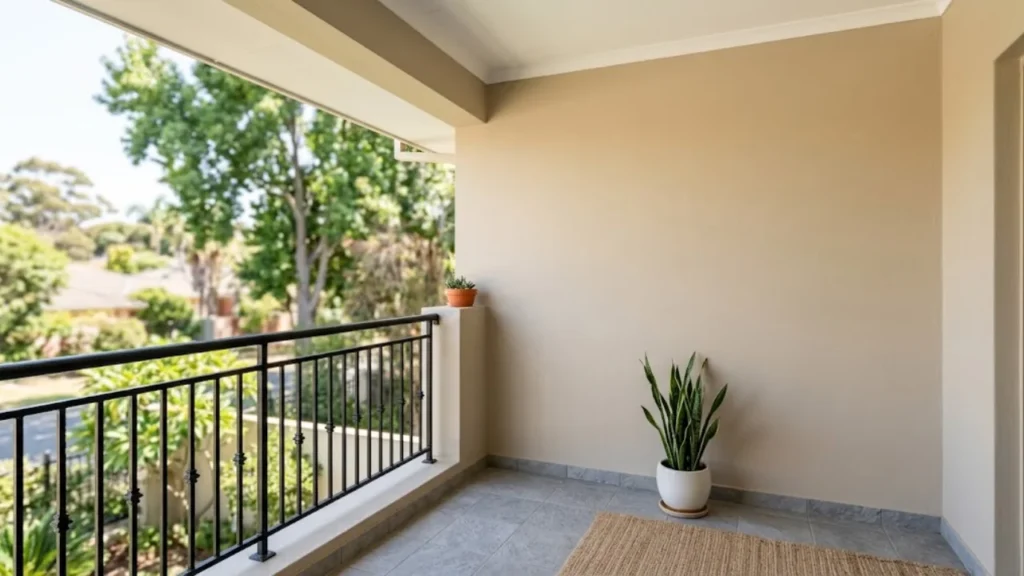
Balconies and Terraces (Semi-Exterior Spaces)

Balconies and Terraces painting style

Covered balconies still face heat, dust, and occasional rain exposure. Treat these more like exterior surfaces.

Recommended colours: Sand beige, stone grey, pearl white.

Recommended paint: Weatherproof, UV-resistant exterior-grade coating.

Climate tip: Even shaded balconies benefit from UV-resistant formulas, since reflected heat still reaches these surfaces.

[Suggested internal link: link to an MDTS exterior painting or villa painting services page here.]

2026 Colour Trends for Dubai Homes

Colour Trends for Dubai Homes

Dubai’s design trends lean toward calm, climate-smart neutrals this year. Bold accent walls remain popular, used sparingly.

  • Desert Sand Beige: A warm, natural tone inspired by the surrounding landscape.
  • Warm Greige: A soft blend of grey and beige, popular across modern apartments.
  • Sage Green: A calming, nature-inspired accent colour for bedrooms and living rooms.
  • Blue-Grey: A cool, sophisticated tone often used in bathrooms and coastal-facing homes.
  • Charcoal Accents: Used sparingly on feature walls or architectural details, never as a dominant tone.

These trends balance style with practicality. Light, reflective bases dominate, with darker tones reserved for small accent areas.

Best Time to Paint Interiors

Unlike exteriors, interior painting works well year-round in Dubai. Air conditioning controls temperature and humidity indoors. Exterior painting is different. The cooler months, November through March, suit exterior work best.

In peak summer heat, exterior paint dries too fast to bond properly. This causes lap marks and early peeling on facades. If you are painting both interior and exterior walls, plan the exterior portion for cooler months. Interior work can proceed anytime.

How Much Does Painting Cost in Dubai?

Costs of painting services in Dubai vary by property size, paint quality, and preparation needed. Most professional painters price per square metre or per room.

ServiceTypical Cost Range (AED)
Single room (standard paint)900 – 1,500
Interior wall painting (per sq metre)15 – 28
One-bedroom apartment (full interior)2,500 – 4,000
Two-bedroom apartment (full interior)3,000 – 6,000
Three-bedroom villa (full interior)7,000 – 18,000
Exterior painting (per sq metre)18 – 40

Prices rise with additional wall repair, premium paint brands, or dramatic colour changes requiring extra coats. Always ask for an itemised quote before booking.

Signs Your Home Needs Repainting

Not sure if it is time to repaint? Watch for these common signs.

  1. Visible fading, especially on sun-facing walls.
  2. Cracking or peeling, often near windows or bathrooms.
  3. Chalky residue when you touch exterior or balcony walls.
  4. Stains or watermarks from past humidity exposure.
  5. Outdated colours that no longer suit your furniture or lifestyle.

Interior walls in Dubai typically need repainting every 4 to 6 years. Exterior walls, due to heavier climate exposure, often need attention every 3 to 5 years.

Choosing a Professional Painting Service in Dubai

DIY painting can work for small touch-ups. For full rooms or villas, professional painting services deliver far better results.

What to Look For

  • A valid Dubai Economy & Tourism (DET) trade licence.
  • Clear, itemised quotes covering prep, paint brand, and number of coats.
  • Public liability insurance for larger projects.
  • A written contract with payment milestones and timelines.
  • Photos of previous painting work in Dubai homes.

What Professional Painting Work Should Include

  • Furniture covering and floor protection
  • Wall cleaning, filling, and sanding before painting
  • Primer application on new or repaired surfaces
  • Two full coats minimum, for even, lasting colour
  • Final clean-up and touch-up inspection

A rushed, single-coat job may look fine initially. Within months, patchiness and early fading often appear.

Conclusion

Painting a Dubai home well means respecting the climate, not just choosing a colour you like. Heat, humidity, and dust all shape which paint performs best. Light, reflective tones work best across most rooms, keeping interiors cooler and brighter. Kitchens and bathrooms need moisture-resistant, higher-sheen finishes for durability.

Bedrooms and living rooms can lean softer and more matte, prioritising comfort and calm. Save bold, dark tones for accent walls rather than full rooms. With the right paint type, finish, and colour for each space, your home will look better and last longer. A professional painting team ensures that result from day one.

Frequently Asked Questions

Categories Plumbing & Water Systems

How to Maintain a Swimming Pool in Dubai’s Heat

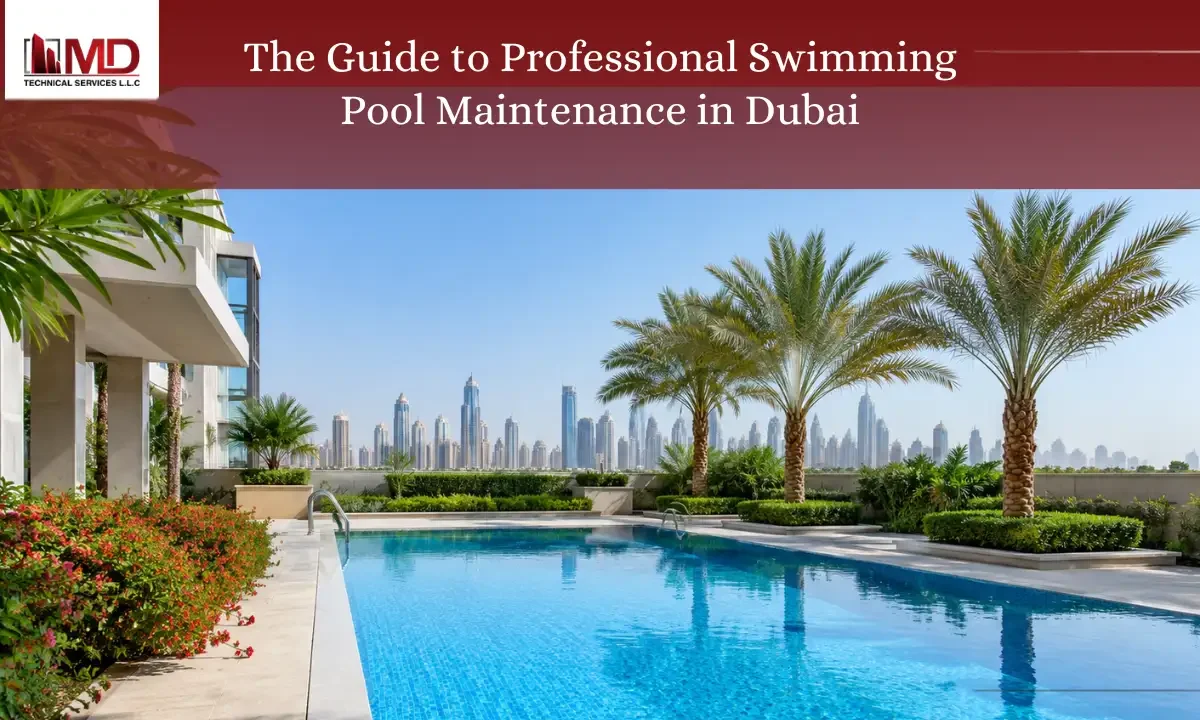
The Ultimate Guide to Professional Swimming Pool Maintenance in Dubai

The sun in Dubai is relentless. Your pool feels it every single day. Between May and September, water temperatures can climb past 35°C. Chlorine burns off faster. Algae spores multiply quickly. Dust from nearby construction and desert winds settles into the water constantly.

That is why generic pool advice from cooler climates often fails here. A pool care checklist built for London or New York simply cannot survive summer in Dubai.

This guide gives you a practical, professional-grade approach to pool maintenance tips built specifically for Dubai conditions. No matter whether you maintain the pool on your own or employ a team, you will be aware of how you should maintain the pool.

This course will introduce you to topics such as water chemistry, filtration, maintenance of the equipment, a pool maintenance checklist, pricing in Dubai, and finding the right maintenance partner for you.

Why Pool Maintenance in Dubai Is Different

Most pool maintenance advice online assumes moderate weather. Dubai does not offer that luxury.

The Climate Factor

Intense UV rays break down chlorine molecules within hours. Evaporation rates are also unusually high here.

A pool can lose several centimeters of water per week during peak summer. This constant water loss shifts chemical balance quickly and unpredictably.

Fine desert sand also finds its way into pools, even indoor ones. It clogs filters faster than in most other regions.

The Usage Factor

The Dubai pools are not only used during summer but throughout the entire year. People use them to swim during December as much as during July.

Continuous usage leads to an increased bather load. Increased bather load is characterized by increased rates of chemical depletion and contamination.

Why This Matters for Your Wallet

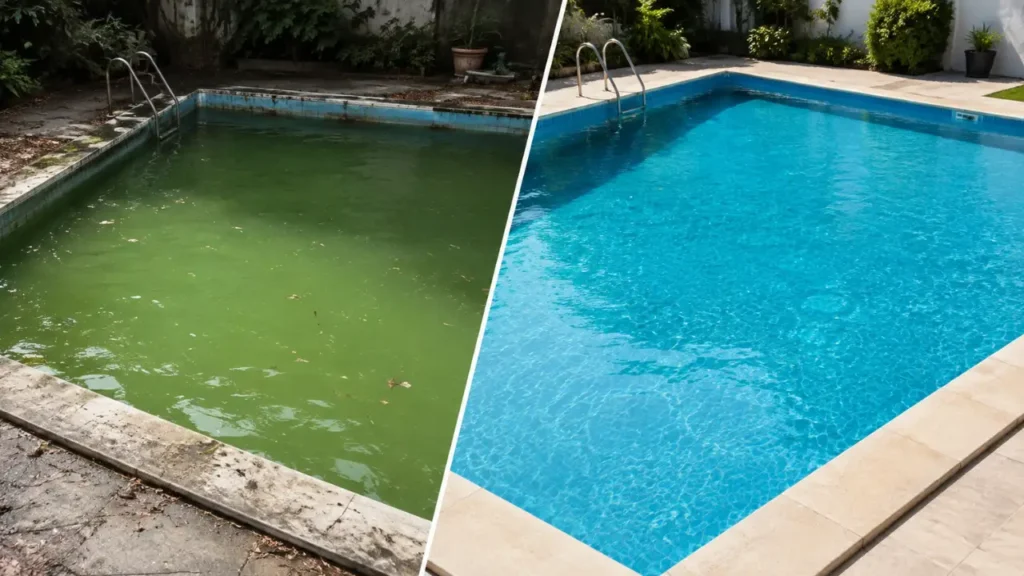
Neglected pools cost far more to fix than to maintain. A green pool recovery can involve shock treatment, multiple filtration cycles, and even acid washing.

Industry sources report that a full recovery from a badly neglected pool is often quoted in the thousands of dirhams, not hundreds. Regular maintenance is almost always the cheaper path.

Dubai Municipality Pool Water Standards

Dubai Municipality Pool Water Standards

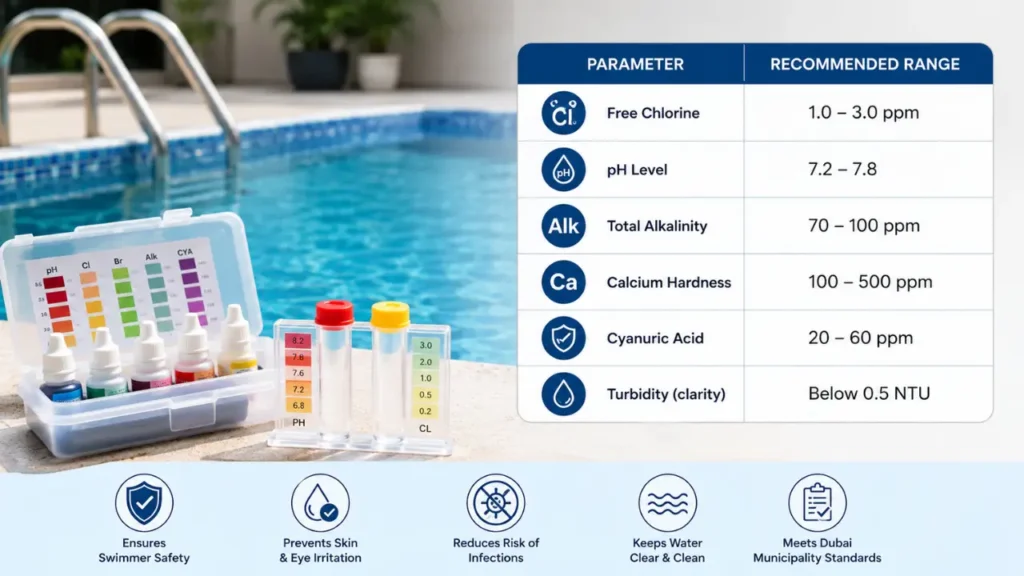
Dubai Municipality sets clear benchmarks for pool water quality, especially for shared, hotel, and commercial pools. Villa owners should follow the same ranges as good practice.

ParameterRecommended Range
Free Chlorine1.0 – 3.0 ppm
pH Level7.2 – 7.8
Total Alkalinity70 – 100 ppm
Calcium Hardness100 – 500 ppm
Cyanuric Acid20 – 60 ppm
Turbidity (clarity)Below 0.5 NTU

For holiday homes specifically, Dubai Municipality’s guideline narrows the range slightly, targeting free chlorine at 1–2 ppm and pH between 7.4 and 7.6. Commercial and community pools face stricter inspection, including bacterial testing for E. coli and total coliforms, which must show zero detection.

Staying within these ranges is not just about compliance. It directly protects swimmers from skin irritation, infections, and cloudy or unsafe water.

The Complete Pool Care Checklist

A strong pool care checklist breaks maintenance into daily, weekly, monthly, and seasonal tasks. This structure prevents small problems from becoming expensive ones.

1. Daily Pool Maintenance Tasks

  • Skim leaves, insects, and floating debris from the surface.
  • Check the water level and top up if needed.
  • Run the pump for at least eight to ten hours.
  • Glance at the water clarity for early warning signs.

2. Weekly Pool Maintenance Tasks

  • Test chlorine and pH levels with a reliable test kit.
  • Brush pool walls, steps, and tile lines to prevent algae buildup.
  • Vacuum the pool floor to remove settled dust and sand.
  • Backwash or rinse the filter based on pressure gauge readings.
  • Check the pump basket and skimmer baskets for blockages.

3. Monthly Pool Maintenance Tasks

  • Test total alkalinity, calcium hardness, and cyanuric acid.
  • Inspect the pool pump, heater, and chlorinator for unusual noise or wear.
  • Check for cracks, loose tiles, or deck damage caused by heat expansion.
  • Clean the waterline to remove oily residue and mineral deposits.
  • Review chemical stock levels ahead of peak summer demand.

4. Seasonal Pool Maintenance Tasks

  • Increase visit frequency to twice weekly during June through September.
  • Schedule a full filter media replacement or deep clean before summer.
  • Have a technician inspect salt chlorinator cells if you use a saltwater system.
  • Consider pool cooling systems if water temperature becomes uncomfortable.
  • Perform a full water change every few years to reset dissolved solids.

How to Maintain a Swimming Pool

Understanding the “why” behind each task helps you maintain a swimming pool correctly, not just mechanically.

1. Water Chemistry Balance

Chlorine is your primary defense against bacteria and algae. Too little chlorine allows contamination. Too much can irritate skin and eyes.

pH affects how well chlorine actually works. If pH drifts outside 7.2 to 7.8, chlorine becomes far less effective, even at the correct dose.

Total alkalinity acts as a buffer. It keeps pH from swinging wildly after rain, splashing, or heavy bather use.

2. Filtration and Circulation

Your filter is the pool’s kidney. It removes fine particles that skimming alone cannot catch.

Run your pump long enough to circulate the entire pool volume at least once daily. In Dubai’s heat, many pools benefit from longer run times, especially during summer months.

Clogged filters strain the pump motor. Over time, this shortens equipment lifespan and increases electricity bills.

3. Cleaning and Debris Control

Regular brushing prevents algae from anchoring onto rough surfaces. This is especially important along steps, corners, and the waterline.

Vacuuming removes heavier debris that has settled on the floor. Dubai’s dust means this step matters more here than in most climates.

4. Equipment Care

Pumps, heaters, and automation units operate under heavy load in Dubai’s high temperatures. Thermal stress increases wear and can lead to sudden breakdowns.

Equipment service will detect minor problems that can be fixed to avoid emergency expenses. This involves inspecting seals, motors, and connections.

5. Safety and Structural Checks

Regularly check pool fences, gates, and slip-resistant surfaces. Today, most Dubai communities require that all pools, both private and communal, be fenced securely.

Also, examine the condition of tiles and decks. Heat may result in cracking and you need to repair any small cracks before they expand.

DIY vs. Professional Pool Maintenance in Dubai

DIY pool maintenance is one of the questions many property owners ask. In reality, it can depend on your time, equipment, and chemical knowledge.

When DIY Works

  • You have basic testing kits and understand how to read them.
  • You have time for daily and weekly checks, even in summer heat.
  • Your pool is small, simple, and free of complex equipment like automation systems.

When Professional Help Makes Sense

  • You travel frequently or cannot commit to a consistent schedule.
  • Your pool has advanced equipment, such as saltwater chlorinators or heat pumps.
  • You want documented compliance records, especially for shared or rented properties.
  • You have already dealt with a green or neglected pool once before.

Typical Pool Maintenance Costs in Dubai

Service TypeEstimated Cost (AED)
Basic monthly cleaning (residential)400 – 1,500 per month
Comprehensive monthly package1,500 – 3,000 per month
Per-visit service (two visits weekly)Around 400 per week
Annual maintenance contractFrom 4,000 per year
Commercial or community pool contracts2,000 – 7,000 per month
Major equipment repair (pump, filter)1,000 and above

Note: These figures are general industry estimates for 2026 and should be confirmed with local providers before budgeting.

Professional contracts typically bundle water testing, chemical balancing, skimming, vacuuming, brushing, and filter care into one visit. Always confirm in writing whether chemicals and minor parts are included in the quoted price.

Common Pool Problems in Dubai and How to Fix Them

1. Cloudy or Green Water

This usually signals low chlorine, poor filtration, or algae growth. Shock treatment followed by extended filtration typically resolves it.

2. Rapid Water Loss

Some evaporation is normal in Dubai’s heat, especially during summer. However, sudden or excessive loss may indicate a leak that needs inspection.

3. Scale Buildup on Tiles

High calcium hardness combined with heat can leave white deposits on tiles. Regular brushing and hardness testing help prevent this buildup.

4. Pump or Filter Noise

Unusual noise often points to worn bearings, blocked baskets, or air leaks in the system. Early inspection prevents complete pump failure.

5. Skin or Eye Irritation

This is frequently caused by imbalanced pH, not excess chlorine, as many people assume. Testing and adjusting pH usually solves the issue quickly.

How to Choose a Pool Maintenance Company in Dubai

Before-and-after comparison of a neglected pool versus a professionally maintained one

Not all Pool Maintenance service providers offer the same quality or transparency. Use these questions before signing any contract.

  1. What exactly is included? Confirm chemicals, vacuuming, and filter cleaning are part of the base price.
  2. Can I get a written estimate? Verbal quotes that later change are a common complaint among pool owners.
  3. Are payments made to a registered business? Avoid paying individuals directly to reduce risk of disappearing contractors.
  4. Will you inspect equipment before starting? Aging pumps or heaters should be flagged before a contract begins.
  5. Do you provide documented water test records? This matters especially for shared buildings, hotels, and community pools.
  6. How do you handle emergency call-outs? Ask whether urgent issues, like sudden green water, are covered or billed separately.

A trustworthy company will answer these questions clearly and confidently. Hesitation or vague answers are a warning sign.

Energy and Water-Saving Pool Maintenance Tips

Sustainable pool care also protects your utility bills. Dubai’s water and electricity costs can add up quickly for pool owners.

  • Use a pool cover during extended periods of non-use to reduce evaporation.
  • Run your pump during cooler night hours to save on electricity where possible.
  • Consider a variable-speed pump, which uses significantly less energy than older single-speed models.
  • Fix leaks promptly, since water in Dubai is billed on a rising consumption scale.
  • Maintain proper chemical balance to avoid unnecessary water changes.

Small adjustments like these can meaningfully lower your annual pool operating costs.

Conclusion

Maintenance of a swimming pool becomes more challenging in Dubai compared to other areas with cooler weather. Luckily for you, a regular pool maintenance checklist can help you prevent almost any problem from occurring. Regular checks of different types are the starting point to keep your pool healthy.

If you decide to perform pool maintenance on your own or entrust this task to professionals, the objective is always the same – protect the quality of the water, the integrity of your equipment, and, most importantly, those who swim in the pool.

A well-maintained pool is always important but in Dubai it is crucial to take care of it properly.

Frequently Asked Questions
Categories Plumbing & Water Systems

Need Water Heater Repair in Dubai? Signs, Costs & Safety Tips

Need Water Heater Repair in Dubai Signs, Costs & Safety Tips

A 6 am cold shower doesn’t sound right in a city that enjoys 45-degree Celsius summer temperatures. However, across Dubai, water heaters break down unexpectedly, suddenly failing to work as expected. Knowledge of the signs to look out for, fair pricing, and safety regulations will not only help you avoid financial loss but also prevent flooding of your ceiling. This guide is all about the water heater repair that Dubai residents rely on every year.

From villas with water tanks on the rooftops to apartments with under-sink units, hard water, extreme heat, and frequent usage affect the performance of the unit. In this article, we discuss the common signs of a failing unit, the average price for repair and installation in 2026, safety guidelines, and tips on choosing the best plumber in your area.

Why Water Heaters Fail Faster

The water in Dubai is harder than in many other places since there are high levels of mineral content in the water. The water creates deposits of limescale inside the tanks and pipes. If you add high rooftop summer temperatures, which usually go above 45°C, then the parts deteriorate faster than the producers anticipated.

Manufacturers of the storage tanks claim that their devices can work for up to 10 years. Yet, in reality, many of them start failing much sooner, in 5-8 years. Large households with daily needs and long showers only contribute to the damage.

It is good to know about the actual lifespan of the device to be able to take measures ahead of time, and not wait for it to fail completely.

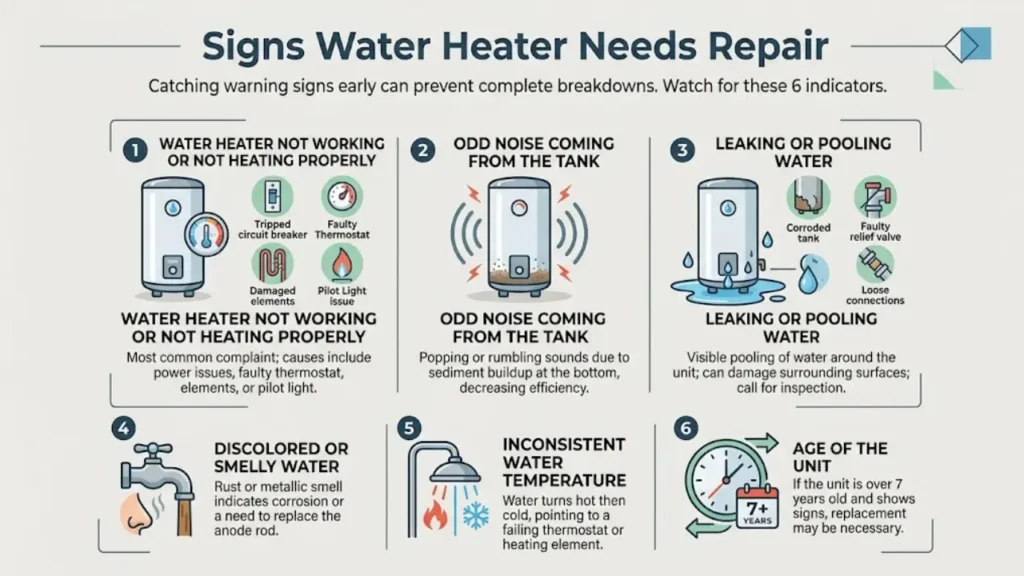
Signs Water Heater Needs Repair

Signs Water Heater Needs Repair

Most water heater problems give warning signs before a complete breakdown. Catching these early can mean the difference between a AED 200 fix and a full replacement.

1. Water Heater Not Working or Not Heating Properly

This is the most common complaint homeowners search for online. The problem of a non-functioning water heater may arise due to any of the following:

  • The circuit breaker or fuse has tripped
  • Faulty thermostat that does not read the water temperature correctly
  • Faulty heating elements in case of electric water heaters
  • Problem in the pilot light of gas water heaters
  • Insulation of the heating element by the accumulation of sediment on its surface

Lukewarm water indicates problems with the thermostat or heating element. In case of lack of hot water at all, you should first check the power supply.

2. Odd Noise Coming from the Tank

Noises such as popping, rumbling, or banging indicate that sediment has accumulated at the bottom of the tank. The reason for this noise is that the heating elements try to heat the water beneath the sediment, causing pressure spots that make a sound. Such sediment decreases the efficiency of the water heater and may cause a crack in its liner.

3. Leaking or Pooling Water

A leaking water heater can cause real damage to ceilings, cabinets, and flooring if ignored. Common causes include:

  • A corroded tank that has developed pinhole leaks
  • A faulty pressure relief valve
  • Loose or degraded fittings and connections
  • Cracked internal components from age or thermal stress

If you see any visible pooling around the base of the unit, call for immediate water line repair or a full inspection. Do not wait for the leak to get worse.

4. Discolored or Smelly Water

The rust, brownish, or metallic odor of the water can indicate that the water heater is corroding or the anode rod needs to be replaced. The anode rod is made to corrode in place of the tank to increase its lifespan.

5. Inconsistent Water Temperature

Water that runs hot and then suddenly cold points to a failing thermostat or a heating element that is only partially working. This is a classic case where DIY troubleshooting for “how to fix water heater?” issues can help, but a professional diagnosis is usually faster and safer.

6. Age of the Unit

In case your water heater has exceeded 7 years and is experiencing any of the conditions mentioned above, it might be wiser to replace the device altogether. We cover this trade-off in more detail below.

Water Heater Repair Costs in Dubai (2026 Guide)

Repair costs in Dubai vary by the type of fault, the brand of your unit, and whether parts need replacing. Below is a general breakdown based on typical market rates across the city.

Issue / ServiceEstimated Cost (AED)
Diagnostic inspection/call-out fee150 – 250
Minor repair (thermostat, fuse, minor part)150 – 300
Major repair (heating element, valve replacement)300 – 600
Leak detection and water line repair250 – 500
Anode rod replacement150 – 350
Tank flushing / descaling service200 – 400
Emergency or after-hours calloutAdd 20% – 50%

Prices are general market estimates for 2026 and can vary by provider, unit brand, and location within Dubai. Always request a written quote before work begins.

How to Decide About Repair vs. Replacement

Not every fault deserves a repair. Use this quick rule of thumb:

  • Repair makes sense when the unit is under 5 years old, and the fault is a single component. The repair cost is under 40% of a new unit’s price.
  • Replacement makes sense when the tank itself is leaking or corroded. The unit is over 7 years old, or repairs have become frequent.

A reputable technician should always offer a free inspection with a clear repair-or-replace recommendation before charging you anything.

Water Heater Installation Costs in Dubai

New installations depend heavily on the unit’s type, capacity, and brand. Here’s what to expect for water heater installation Dubai pricing in 2026.

Tank CapacityUnit Only (AED)Installed, Fully Fitted (AED)
30 litre400 – 600800 – 900
50 litre500 – 900950 – 1,200
80 litre700 – 1,0001,050 – 1,300
100 litre900 – 1,3001,240 – 1,400
Tankless (instant) unit1,200 – 3,5001,600 – 4,000

Typical installation time ranges from 2 to 4 hours for a simple switch-out. More complicated installations, those with concealed ceiling work, rewiring, or moving plumbing, will naturally be more expensive.

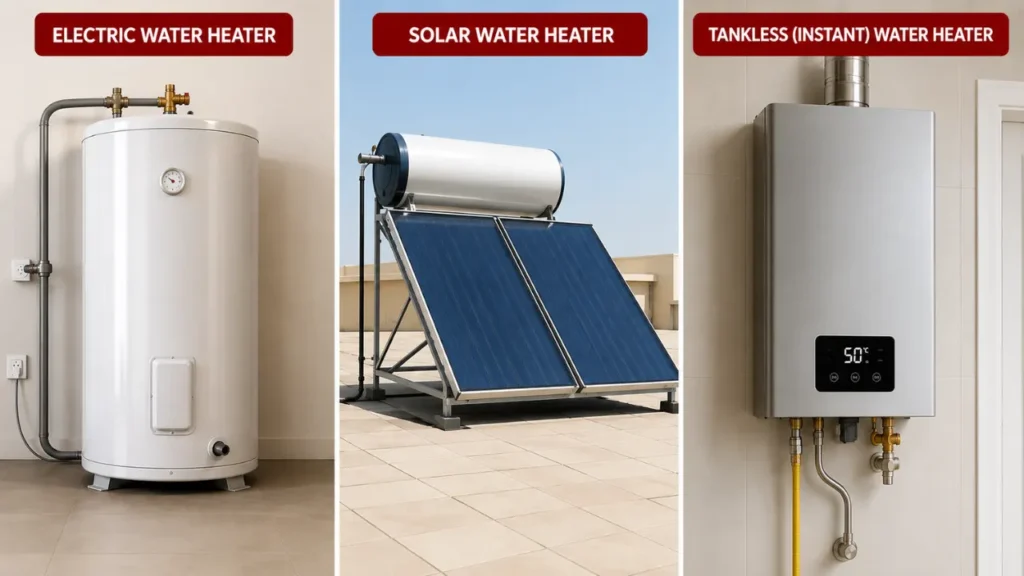
Electric vs. Solar vs. Tankless for Dubai Homes?

Electric vs. Solar vs. Tankless for Dubai Homes

Electric water heaters are the most popular type of heaters used in Dubai houses and apartments. These heaters are cheap, easy to install and maintain.

Solar water heaters use Dubai’s abundance of sunlight. They require an initial investment that will pay off by lowering monthly utility costs in the long term for villa owners who have accessible roofs.

Tankless (instant) water heaters heat the water instantly without the need to keep a stockpile of it. They provide good savings in both terms of space and power but cost more when repaired since the parts are more specific and not readily available at your local hardware store.

Water Heater Maintenance

The regular maintenance of a water heater is the best prevention of any breakdown. A properly maintained water heater works efficiently, thus saving money spent on its operation.

Recommended Maintenance Schedule

  • Once per year: Drain and flush the tank in order to get rid of the accumulated deposits.
  • Every 12 to 18 months: Check the condition of the anode rod and replace it when needed due to heavy corrosion.
  • Twice per year: Test the pressure relief valve to make sure that it allows releasing the pressure.
  • Check the thermostat setting to make sure it maintains temperature between 50 and 60 degrees Celsius.
  • Check for leaks every month visually.

Usually, most of the plumbing companies in Dubai provide maintenance programs for water heaters. This service costs less than one-time repairs and provides years of efficient operation.

DIY Maintenance vs. Professional Service

It is possible to perform basic checks such as checking for leaks visually and resetting the tripped breaker by yourself, especially for those who feel themselves confident enough in handling basic tools. But the jobs connected with electrical wiring, gas lines, and opening the tank have to be performed only by the plumber.

Safety Tips for Water Heater Repair and Installation

Water heaters combine electricity, gas, and pressurized hot water in one appliance. That combination makes safety non-negotiable.

  • Always cut the power before inspecting: Switch off the circuit breaker for electric water heaters before opening any panel.
  • Never bypass the pressure relief valve: This valve prevents dangerous pressure buildup and potential tank rupture.
  • Check for gas leaks by smell, not flame: If you smell gas near a gas-powered unit, leave the area and call a professional immediately.
  • Keep the temperature setting 60 °C below: This reduces scalding risk while still killing most bacteria in the tank.
  • Install units on a stable, ventilated surface: Poor ventilation around gas units increases carbon monoxide risk.
  • Don’t attempt tank replacement solo: A full tank, once filled, can weigh over 80 kg — a two-person job at minimum.
  • Hire licensed, insured technicians: Verify credentials before allowing anyone to work on gas lines or electrical connections in your home.

How to Choose a Local Plumber in Dubai

Not all local plumber companies have the same proficiency in repairing water heaters. Follow these steps while comparing different local plumber services:

  • Get a free inspection to diagnose any problems beforehand.
  • Make sure they are licensed and insured to perform plumbing and electrical repairs.
  • Seek out an estimate broken down into labor costs, parts, and call-out charges.
  • Look for warranty guarantees on both parts and labor – minimum 90 days.
  • Research reviews of those who have used local plumber services for hot water heater repair near me.
  • Ask about whether they provide emergency services if you need this service.

If they are marketing themselves as hot water heater repair near me services, then they should be able to get to you within a few hours from anywhere in Dubai.

[External link suggestion: link to a UAE consumer protection or municipality page on licensed contractor verification] [Internal link suggestion: link to MDTS Dubai’s plumbing services or contact page]

Common Mistakes Homeowners Make

  • Ignoring small leaks: That small leak today will be an expensive water line repair tomorrow.
  • Setting the thermostat too high: Wasting energy and increasing scalding risk does nothing for you.
  • Delaying anode rod replacement: One cheap part prevents corrosion of your whole water heater tank.
  • Comparing cost only; not credentials: Sometimes that lowest quote means uninsured, unlicensed work.
  • Going to the store instead of the plumber: Taking a trip to the Home Depot plumbing section for replacement parts is fine for simple jobs but not electrical or gas repair jobs.

Conclusion

Water heaters go unnoticed until they fail to perform. The harsh climatic conditions of Dubai, along with the presence of hard water, reduce the lifespan of a water heater much faster than homeowners might think. Identifying any abnormal activity such as odd noises, fluctuations in temperature, and water color may help prevent an avoidable problem.

Where the cost of repairing the water heater approaches its replacement cost or the water heater has exceeded the age of seven years, then replacing it is definitely the better option to choose from. In either case, it is imperative that you seek the assistance of a licensed plumber who will provide you with a reasonable quote. Maintaining your water heater is the least expensive protection against a cold bath and ceiling damage.

Frequently Asked Questions
Categories AC Tips

AC Not Cooling in Dubai? 10 Causes and DIY Checks Before Calling a Technician

AC Not Cooling in Dubai 10 Causes and DIY Checks Before Call a Technician

It’s 3 PM in July. The outdoor temperature is hovering near 45 °C, your air conditioning unit is on maximum, you can hear the compressor working and the fans turning, the vents are open, and your living room still feels like being inside an overheated car. If you have been living in Dubai for at least one summer season, there is no doubt you know the situation pretty well. This is probably the most frequent problem reported to our team during the hot months from May until September, and the problem can be caused by one of the very few factors in nine cases out of ten. After many years of dealing with the same problems in Dubai apartments, villas, and offices, we understand that the “AC not cooling” issue doesn’t necessarily require an urgent visit by our specialists; it just needs five minutes to perform the necessary checks.

Here we will give you step-by-step instructions on how to check whether your AC is functioning properly and the top 10 reasons why it stops cooling in Dubai.

Why Dubai ACs Are Especially Prone to Cooling Problems

However, jumping into the list of causes, one needs to understand what makes it occur so often in this region, in particular. There are three reasons why air conditioners in the UAE have to operate in much harsher conditions compared to units located in a milder climate zone:

  • Extreme heat load: When the outdoor temperature exceeds 45 °C, the condenser of your unit has to reject a tremendous quantity of heat in order to keep the indoor coil operable. Even minor inefficiency- a dirty or less-than-sufficient coil – will become visible immediately.
  • Heavy dust and sand: The fine desert dust gets inside your unit everywhere: filters, coils, ducts, and outdoor condenser fins. While in another region a filter could be plugged in about six months, in this region it will happen three or four weeks earlier.
  • High humidity, especially near the coast: Due to the high humidity level, the air conditioning systems work by extracting considerable amounts of water from the atmosphere, thus straining the drainage and providing the perfect conditions for the development of sludge, mold, and drain line blockages.

Remember these three factors in mind as you read through the list below; almost every cause traces back to one of them.

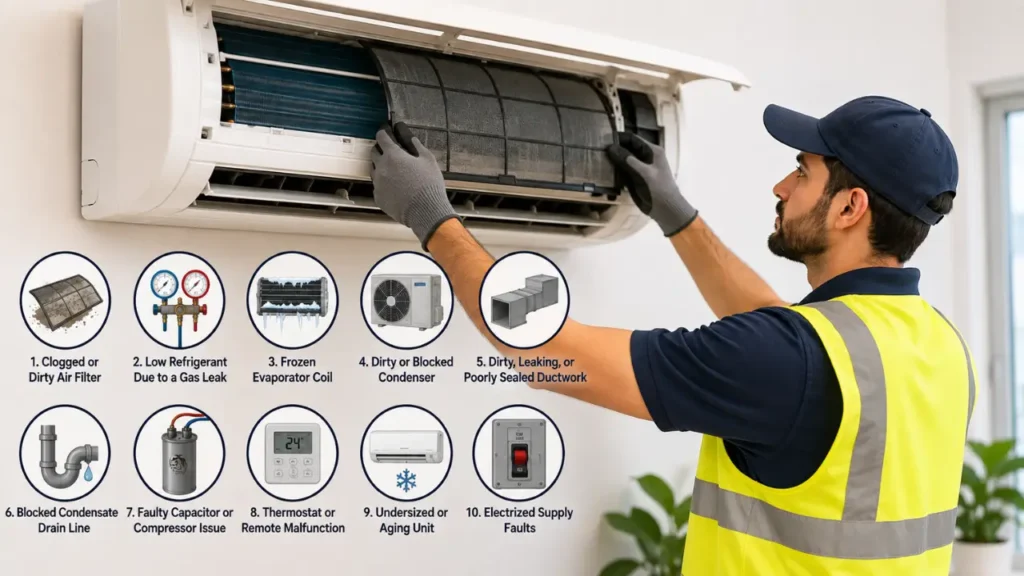
10 Common Causes of an AC Not Cooling in Dubai

10 Common Causes of an AC Not Cooling in Dubai

1. A Clogged or Dirty Air Filter

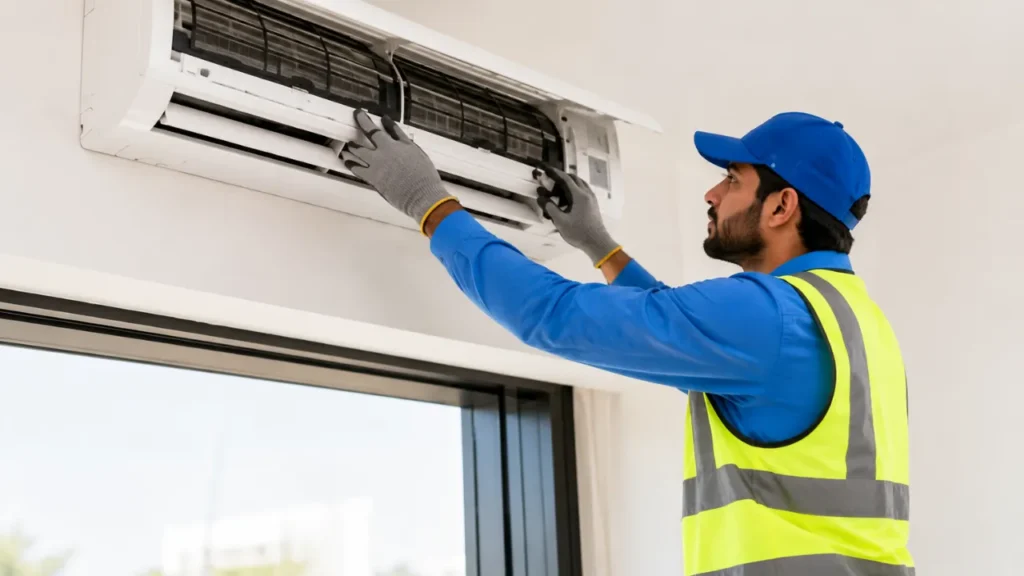
There is no doubt about it; this is easily the commonest cause of an inefficient or overheated AC in the UAE. The function of the air filter is to screen out dirt before it gets to the indoor coil, and the air in Dubai is far dustier compared to other cities. When the filter is blocked, the efficiency of the airflow through the coil reduces significantly, making it difficult for the unit to extract heat from the indoors.

DIY fix: Rinse the filter using water and then put it back in place. This should be done after every 2-4 weeks in the peak summer months.

2. Low Refrigerant Due to a Gas Leak

If the air blown into the room is only slightly cool, you hear some hissing noise around either the indoor or outdoor unit, or there is a presence of frost on the copper refrigerant lines, insufficient refrigerant could be the cause. At this stage, it is important to understand that refrigerant is a sealed system fluid; it is not used up in any way in the normal functioning process of the AC unit.

Why a quick top-up isn’t a real fix: The most common inexpensive service performed in such cases includes simply adding some gas and sending the technician away. Not repairing the leakage will eventually lead to the AC blowing out warm air after a month or so, requiring the replenishing again.

Fix: This is strictly a job for a licensed technician with leak-detection tools, a vacuum pump, and the right refrigerant type for your unit.

3. A Frozen Evaporator Coil

Opening the indoor unit to find an accumulation of ice in the coil or the copper lines means that the evaporator is frozen. When this occurs, the effectiveness of cooling is drastically reduced since ice is not a good conductor of heat. Freezing is typically a sign of another problem. It may be blocked airflow due to a clogged filter, or a low refrigerant level resulting in the coil getting below the freezing temperature.

DIY fix: Completely turn off the AC and place it in fan mode (or switch it off). The melting process will take several hours without intervention. Do not attempt to manually remove ice from the coil; you could damage the copper tubing. When the coil is melted, check the filter and determine if the problem still persists.

4. A Dirty or Blocked Condenser (Outdoor Unit)

The role of the outdoor condenser unit is to dispose of the heat collected by the air conditioning system from inside the home. In Dubai, the aluminum fins of the condenser get clogged very fast by dust, sand, and other particles present in the air, especially in systems that are installed near building sites or at the ground floor level. If the condenser unit is blocked, then it would not be able to disperse heat well, and the entire system will have to work more while producing less efficiency.

DIY fix: Rinsing the accessible fins using a garden hose (do not use high-pressure water jets since the fins could bend) is helpful. A full chemical coil clean, however, is best left to a technician as part of a proper AC service.

5. Dirty, Leaking, or Poorly Sealed Ductwork

Dust accumulation or leakage at the joints will cause a situation where certain rooms are cool while other rooms are still hot when you are using a central or ducted AC. Air leakage from the joints makes the cooled air seep into the ceiling void before it ever reaches your living space. While dust-clogged ducts restrict airflow the same way a dirty filter does, except spread across your entire home.

Fix: Duct inspection, sealing, and professional cleaning. You should not attempt this yourself, because ducts are located above false ceilings and can only be inspected and cleaned with special equipment.

6. A Blocked Condensate Drain Line

While your AC system will cool the air, it will pull a substantial amount of moisture from the air. In a city like Dubai where the atmosphere is humid, the system collects several liters of moisture daily. The collected moisture should be drained via the drain pan and drain line. Gradually, dust gets into the collected moisture and turns into sludge, leading to blockage of the drain line. Some modern systems come with a safety float switch that will shut off the system when the drain pan is filled with water. This is why a blocked drain line may be seen as “the AC stopped cooling” rather than visible water damage.

Symptoms: Dripping water from the indoor unit, wet patches on the ceiling, musty odor or lack of cooling for no obvious reason.

Fix: A drain line flush is quick and inexpensive for a technician, and far cheaper than repairing a water-damaged ceiling. That would be needed in case of an ignored drain problem.

7. A Faulty Capacitor or Compressor Issue

If your outdoor unit produces humming sounds, but the fan blade does not move, or your compressor fails to work and keeps clicking, then a faulty capacitor might be the reason for that. The capacitor provides a starting impulse of power to the compressor and fan motor. When the capacitor deteriorates, the motor has problems starting, and the result is a burden to the compressor, which is the most expensive part of your air conditioner.

Important safety note: The capacitor accumulates electrical charge even if the air conditioner is turned off and can give you a very painful shock. This is something only a professional technician can fix.

8. Thermostat or Remote Control Malfunction

In some instances, the AC system itself could be fine, but the control device giving it its operating instructions could have the problem. This is when there will be no room temperature conformity between actual temperature and the set temperature, when the AC turns on and off repeatedly in short bursts, or the display shows erratic behavior.

DIY fix:  First, replace the batteries in a wireless control or thermostat and make sure that the device is not installed in a peculiar place such as a window or sun-exposed area or right beside a supply vent, since this gives the device an incorrect temperature reading.

9. An Undersized or Aging Unit

If you find that your AC has never coped well during peak summer, works non-stop, and has a hard time in the largest or sunniest room. Then the cause of the problem may not be a fault, but just a lack of power for such a room. Air conditioning’s cooling power should correspond to the room size, ceiling height, window area, and sun exposure. Changes made to the room, like adding glass walls, opening partitions, or enlarging the room, can silently exceed the capacity of the installed unit. Also, units that are more than 10–12 years old have already lost some of their initial cooling capacity.

Fix: An accurate calculation done by a specialist will help you to understand what is necessary to fix, either duct change, new installation, or better insulation/shading.

10. Electrical Supply Faults

If your air conditioner continues to trip the breaker, causes your lights to flicker when the compressor turns on, or gives off a burning smell around the distribution panel, then it’s an electrical problem, not a mechanical one. The breaker is simply doing what it’s supposed to by stopping any fault in the home’s electrical system, be it faulty wiring, malfunctioning components sucking too much power, or a faulty connection.

Fix: Stop using the unit and call an AC technician immediately. Repeatedly resetting a breaker that keeps tripping is a fire risk, not a solution.

5 Quick DIY Checks Before You Call Anyone

5 Quick DIY Checks Before You Call Anyone

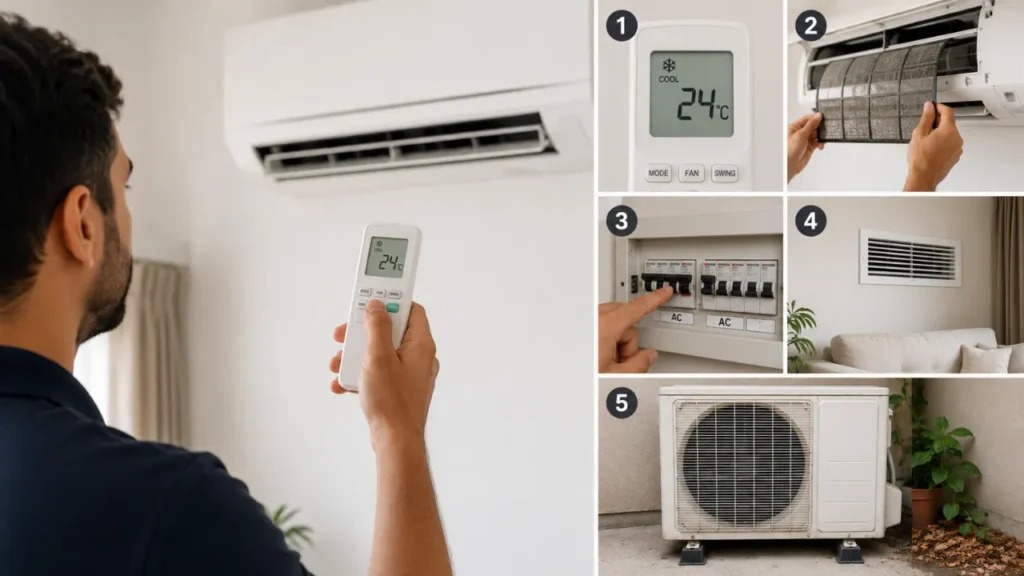
Before assuming the worst, run through this two-minute checklist. It resolves a surprising number of “my AC isn’t cooling” calls without any tools or technical knowledge.

  1. Check the mode and temperature setting. It sounds obvious, but it’s the single most common false alarm. Confirm the remote or thermostat is set to Cool mode, not Fan, Dry, or Auto, and that the target temperature is a few degrees below the current room temperature. A stray tap on the remote, or a child playing with it, is often the entire “problem.”
  2. Pull out and inspect the air filter. Slide open the front panel of your indoor unit and remove the filter. If it’s grey, matted, or you can’t see light through it, that’s your answer. Rinse it under running water, let it air-dry completely, and put it back.
  3. Look at the breaker panel. Open your distribution board (DB) and check whether the AC’s breaker has tripped. You can reset it once. If it trips again immediately, stop; that’s a sign of a real electrical fault, not something to keep resetting.
  4. Check vents, returns, and furniture placement. Walk through the room and confirm that supply vents are fully open and that nothing- curtains, sofas, wardrobes, stacked boxes- is blocking the return air grille. Restricted airflow on either side chokes the whole system.
  5. Inspect the outdoor condenser unit. If you have access to your outdoor unit (on a balcony, rooftop, or ground-level pad), check that it’s running, that its fan is spinning, and that it isn’t buried in dust, sand, leaves, or stored items. The condenser needs open space around it to dump heat outside; a smothered unit simply can’t cool efficiently.

If one of these five checks solves the problem, you’ve saved yourself a callout fee. If cold air still isn’t coming through, one of the ten causes below is almost certainly responsible.

Typical AC Repair Costs in Dubai (2026 Estimates)

Costs vary by unit size, brand, and building type, but these are typical market ranges across Dubai to help you budget before booking a visit.

ServiceTypical Cost (AED)
Diagnostic/call-out visit100 – 200
Filter cleaning & basic service120 – 250
Refrigerant leak detection, repair & regas350 – 800
Frozen coil diagnosis & repair200 – 500
Condenser coil cleaning150 – 350
Duct cleaning (per system)400 – 900
Drain line flush100 – 200
Capacitor replacement150 – 300
Thermostat replacement200 – 400
Compressor replacement1,200 – 3,000+

Note: Prices are indicative and can vary depending on unit tonnage, brand, accessibility, and building type. Always ask for a fixed quote after diagnosis, before repair work begins.

How to Prevent This From Happening Again

Nearly every cause on this list is preventable with routine maintenance, done ahead of summer rather than in the middle of it:

  • Clean filters every 2–4 weeks during peak cooling months.
  • Schedule a professional AC service twice a year, ideally once before summer (March–April) and once in autumn, including coil cleaning, drain flushing, and a refrigerant pressure check.
  • Keep the outdoor condenser clear of dust, storage items, and anything within 30–50cm of its airflow path.
  • Set a sensible, steady temperature (around 23–24°C) rather than constantly adjusting it, this reduces strain on the compressor and capacitor.
  • Consider an annual maintenance contract (AMC) if you’d rather not track service dates yourself; a good AMC includes scheduled visits and priority response if something fails during peak summer.

When You Should Stop Troubleshooting and Call a Technician

DIY checks are genuinely useful for the first few causes on this list, the filter, the settings, a tripped breaker, blocked vents. But you should stop and call a professional immediately if you notice any of the following:

  • A hissing sound or visible frost on refrigerant lines
  • A breaker that trips again immediately after resetting
  • A burning smell anywhere near the unit or the DB panel
  • Water actively dripping or pooling near the indoor unit
  • The outdoor fan or compressor not starting despite power reaching the unit

Attempting to fix any of these yourself isn’t just unlikely to work; it can be genuinely dangerous, given the electrical currents and pressurized refrigerant involved.

Same-Day AC Repair in Dubai

Same-Day AC Repair in Dubai

If you’ve worked through the checklist above and your AC still isn’t cooling, the smartest next step is a proper diagnosis rather than more guesswork. Our team at MD Technical Services LLC  handles emergency AC repair across Dubai, split units, ducted systems, and FCUs, with technicians who can usually reach you the same day, a clear price confirmed before any work starts, and no guesswork billing. Whether it’s a slow refrigerant leak, a failing capacitor, or a system that’s simply overdue for a proper service, we’ll find the actual cause and fix it once, not repeatedly.

Final Thoughts

An AC that won’t cool properly in Dubai’s heat is more than an inconvenience; left unresolved, small issues like a dirty filter or a minor refrigerant leak tend to escalate into bigger, more expensive repairs, from frozen coils to compressor damage. The good news is that the checks in this guide will resolve a large share of cases on their own, and for everything else, knowing exactly what’s likely wrong means you can describe the problem clearly, get a faster diagnosis, and avoid paying for guesswork.

If you’ve worked through the checklist above and your AC is still struggling to cool, it’s time to bring in a professional who can pinpoint the exact cause and fix it properly, the first time.

Frequently Asked Questions
1 2 3 5